


Aug 24,2026
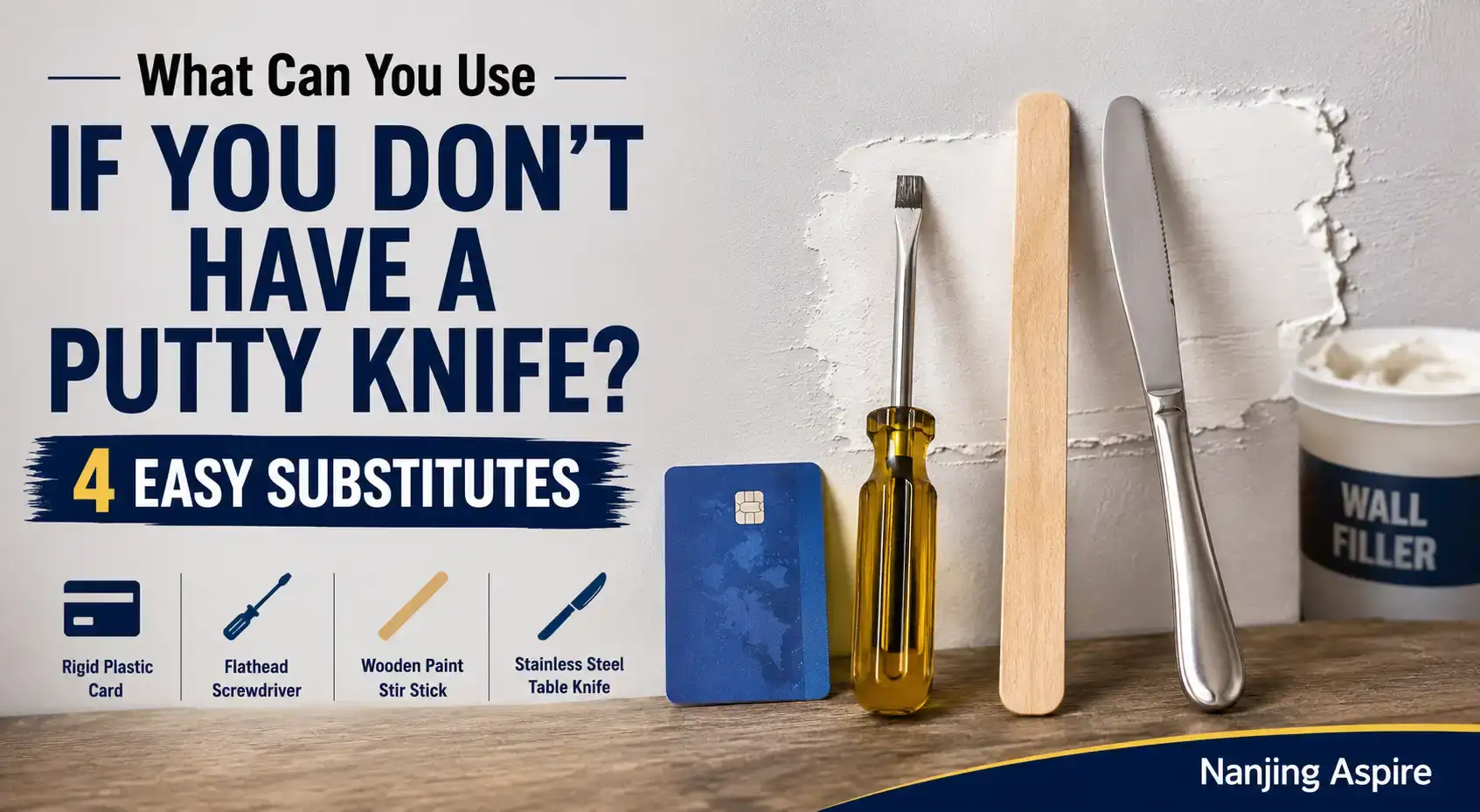
If you do not have a putty knife, you can use a rigid plastic card, flathead screwdriver, wooden paint stir stick, or stainless steel table knife for certain small repair and scraping tasks. The best option depends on whether you need to spread filler, remove loose material, or scrape a small amount of residue.
These items can help you complete minor jobs when a putty knife is missing, but they are temporary substitutes rather than complete replacements. A purpose-built putty knife has a blade designed specifically for spreading, smoothing, scraping, and applying patching compounds. Improvised tools may work for a small repair, but they can be less comfortable and less effective during repeated use.
Here is how to use each substitute and when it makes the most sense.
A rigid plastic card is one of the easiest and safest temporary substitutes for a putty knife when you need to spread a small amount of filler or patching compound. An expired credit card, hotel key card, membership card, or another stiff plastic card can provide a reasonably straight edge for light repair work.
Plastic cards are especially useful for small holes, shallow dents, nail holes, and minor surface imperfections. They are better suited to spreading lightweight materials than to scraping hard or dried substances.
Start by cleaning the damaged area and removing any loose dust or debris. If the surface contains loose pieces of old compound, remove them carefully before applying new material.
Take a small amount of spackle, lightweight wall filler, or suitable patching compound and place it along the straight edge of the plastic card. You do not need to cover the entire edge. Using too much material can make the repair harder to control.
Hold the card at a shallow angle against the wall. Move it across the damaged area with steady pressure so the compound is pushed into the hole or depression. Make several light passes instead of trying to force a large amount of compound into the surface at once.
After filling the area, use the clean edge of the card to remove excess material around the repair. This helps leave the surrounding surface relatively smooth and reduces the amount of sanding required later.
A plastic card works best when you need a flexible edge for a small repair. It is particularly useful on drywall and other surfaces where a rigid metal edge could cause unnecessary scratches or gouges.
However, do not expect the card to perform like a professional putty knife. Its edge can bend, wear down, or become damaged when exposed to heavy pressure. It is also too small for spreading compound over large areas efficiently.
A flathead screwdriver is useful when the main job is not spreading compound but removing loose material before the repair. Its narrow metal tip can reach small areas where loose plaster, dried compound, or other weak material needs to be removed.
This makes a screwdriver a practical emergency option for preparing a small damaged area. However, it should be used carefully because its narrow metal edge can easily damage drywall, soft wood, or other delicate surfaces.
First, inspect the damaged area and identify only the loose or unstable material. Do not use excessive force to remove material that is still firmly attached to the surface.
Hold the screwdriver at a shallow angle and gently work the flat tip under loose material. Use controlled movements to lift or scrape away the weak pieces. The goal is to create a clean and stable surface for the repair compound.
For shallow cracks in plaster or masonry surfaces, the tip can also be carefully drawn along the crack to remove loose particles. This creates a cleaner channel for patching material.
Once the loose material has been removed, clean away the dust before applying filler or another repair product.
A flathead screwdriver is not a good replacement for a putty knife when you need to spread or smooth large quantities of compound. Its narrow tip can create grooves rather than a smooth finish.
Avoid applying excessive force on drywall or other soft materials. You can quickly turn a small repair into a larger damaged area if the screwdriver digs too deeply into the surface.
A screwdriver can also help with opening a paint can lid when another suitable tool is unavailable, but this is a separate use and does not make it a direct substitute for a putty knife.
A wooden paint stir stick can be useful when you need a broader spreading surface. Its flat edge gives you more coverage than a plastic card and can help distribute joint compound, filler, or similar materials across a relatively small repair area.
This option is particularly useful on jobsites where paint is already being used and wooden stir sticks are readily available.
Before applying the compound, make sure the edge of the stir stick is reasonably smooth and free from splinters. A damaged or rough wooden edge can leave unwanted marks in the repair material.
Place a moderate amount of compound along the flat edge. Hold the stick against the surface and move it across the repair area using even pressure.
For a shallow depression, make several passes in different directions to distribute the compound. Once the area is filled, use lighter pressure to remove excess material from the surrounding surface.
Allow the compound to dry according to the product instructions. Because a wooden stick does not have the smooth, flexible edge of a steel putty knife, the finished area may need additional sanding.
A wooden stir stick is more useful when you need to spread material over a wider section than a plastic card can comfortably cover. It can work for small drywall repairs, filling shallow depressions, or distributing compound over a repaired section.
It is not a good option for detailed finishing work where a clean feathered edge is important. The wooden edge may leave ridges, and the stick can become soft or damaged when exposed to wet materials for extended periods.
A stainless steel table knife can work as a temporary scraping tool for certain small jobs. Its firm metal edge can help remove loose paint, dried adhesive, or small amounts of residue from suitable hard surfaces.
A table knife is more useful for scraping than for precision patching because its blade is not designed to spread repair compounds.
Position the knife at a shallow angle against the material you want to remove. Apply light pressure and push the edge beneath loose paint, dried residue, or other material that has already separated from the surface.
Work slowly instead of trying to remove a large section in one motion. This gives you better control and reduces the risk of scratching the surface.
For example, a table knife may help remove a dried paint drip from a hard surface or lift loose paint from a baseboard. Always test the tool on a less visible section first if you are unsure how the surface will react.
A table knife is not suitable for heavy scraping, large-scale paint removal, or demanding patching work. Its blade shape and handle are designed for eating rather than construction tasks.
The blade can also be too narrow for spreading compound efficiently. If you need to repair a large area, using a table knife will take more time and may produce an uneven finish.
The right substitute depends on the task you need to complete. There is no single emergency replacement that performs every function of a putty knife.
For small wall holes and light patching, a rigid plastic card is usually the most practical choice. Its straight edge can spread lightweight filler while reducing the risk of scratching the surrounding surface.
For removing loose material from a narrow crack or damaged area, a flathead screwdriver can be useful. Its narrow metal tip allows you to reach small sections and remove unstable material before patching.
For spreading compound across a wider repair area, a wooden paint stir stick provides more surface coverage than a plastic card.
For minor scraping jobs, a stainless steel table knife can provide enough rigidity to remove loose paint or dried residue from suitable surfaces.
Understanding this difference helps you choose the substitute based on the actual job rather than simply selecting the closest object available.
The main challenge with an emergency substitute is achieving a smooth finish. Purpose-built putty knives have blades designed to maintain consistent contact with the surface, while household items may have uneven edges or unsuitable shapes.
Use small amounts of compound rather than applying a thick layer in one pass. A thin layer is easier to control and generally requires less sanding.
Keep the substitute at a shallow angle while spreading. Avoid pressing too hard because excessive pressure can remove too much compound or damage the surrounding surface.
Make multiple light passes instead of one aggressive pass. After the compound has dried, sand the area if necessary and remove the resulting dust before applying paint or another finishing material.
For scraping, keep the edge at a low angle and use controlled movements. The objective is to remove the unwanted material without cutting deeply into the surface underneath.
Not every flat object is suitable for patching or scraping. Sharp metal objects can easily damage drywall, wood, painted surfaces, and other substrates. Objects with rough or jagged edges can also leave marks in wet compound.
Avoid using excessive force with improvised tools. A temporary substitute is only useful if it allows you to complete the task without creating additional damage.
You should also avoid using dirty or contaminated objects for spreading repair compounds. Dust, grease, food residue, and other contaminants can affect the repair surface and may reduce the quality of the finished result.
If an item bends easily, has a sharp point, contains loose parts, or has a rough edge, it is generally a poor choice for spreading or scraping work.
Emergency substitutes are useful for small jobs, but there is a point where using the wrong tool becomes inefficient.
If you need to repair multiple walls, spread compound across a large area, remove a significant amount of old material, or complete repeated finishing work, getting a proper putty knife is the better option.
A dedicated putty knife gives you better blade control and allows you to spread material more evenly. It is also easier to hold during repeated work and is available in different blade widths for different applications.
For professional users, continuing to rely on household objects can increase labor time and make consistent finishing more difficult. The small cost of keeping the correct hand tools available is often much lower than the time lost through inefficient repairs.
A purpose-built putty knife is designed around the tasks that improvised substitutes are only trying to perform. Its blade provides a suitable combination of rigidity and flexibility for spreading filler, smoothing compound, scraping loose material, and performing other surface preparation tasks.
Different blade widths also allow users to select the right tool for the job. Narrow putty knives are useful for filling small holes and tight areas, while wider blades can spread compound over larger surfaces.
A proper handle also provides better control during repeated use. This matters for contractors, painters, maintenance teams, and other workers who may use the same tool throughout an entire workday.
For occasional emergency repairs, a plastic card or another suitable substitute can be enough. For regular professional work, however, having the correct putty knife available is faster, more consistent, and more reliable.
Knowing what you can use if you do not have a putty knife can help you finish a minor repair without stopping the job. A rigid plastic card, flathead screwdriver, wooden paint stir stick, or stainless steel table knife can each handle specific emergency tasks when used carefully.
However, these alternatives should remain temporary solutions. They do not provide the same performance, durability, or control as a dedicated putty knife.
Contractors, maintenance companies, painters, hardware distributors, and other commercial users can avoid these shortages by maintaining enough putty knives in their regular tool inventory. Keeping different sizes available also makes it easier to handle both small repairs and broader surface preparation work.
For commercial buyers, proper wholesale putty knives sourcing can help maintain a reliable supply of hand tools for ongoing projects. Nanjing Aspire supplies putty knives for commercial and wholesale applications, helping buyers maintain dependable inventory for patching, scraping, and surface preparation work.