


Aug 24,2026
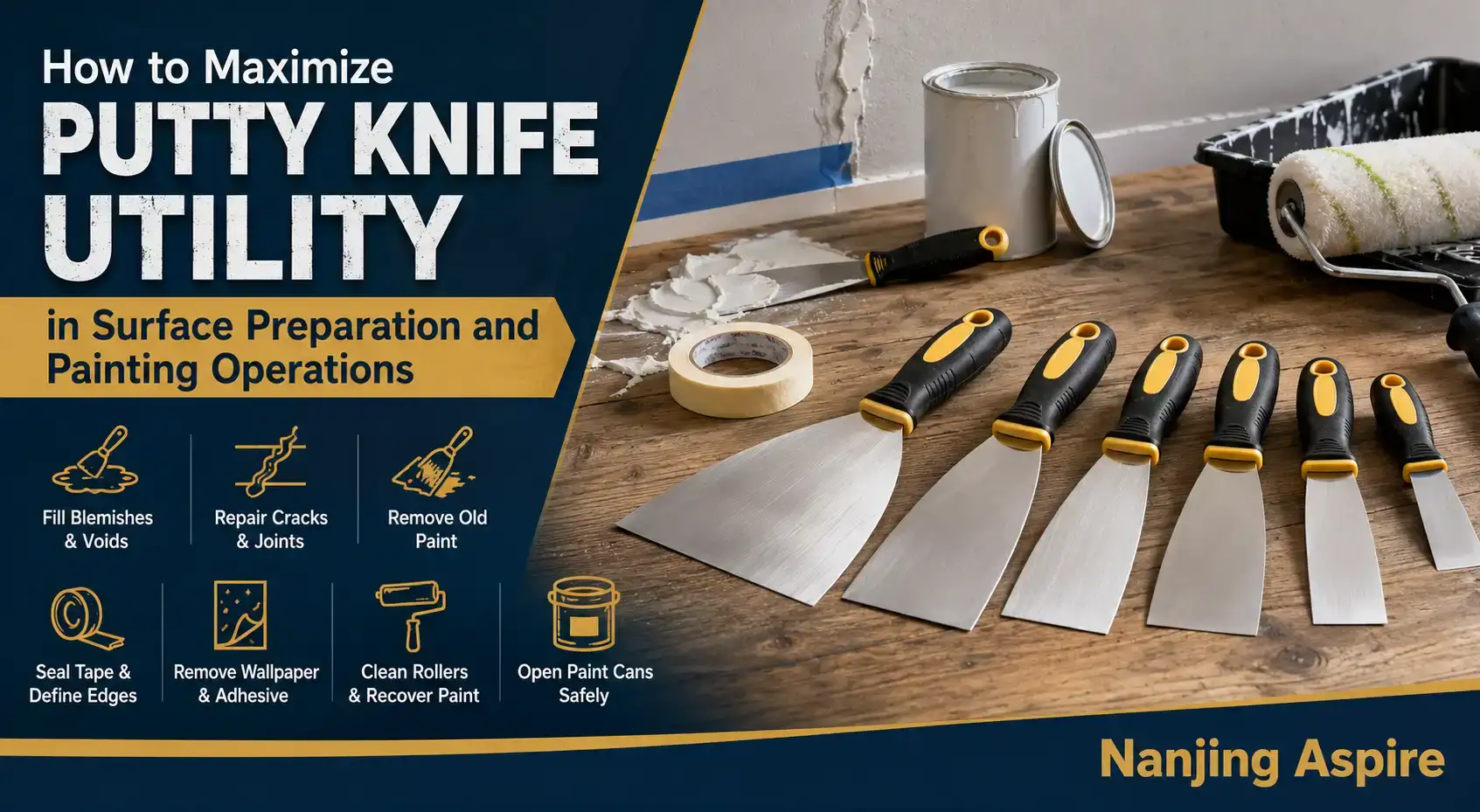
Surface preparation is the foundational determinant of longevity and aesthetic quality in any commercial or residential painting project. While professional painters often focus heavily on paint formulation, primer selection, and application machinery, the hand tools utilized during the preliminary stages dictate the final finish. Among these manual instruments, the putty knife remains an indispensable yet frequently underestimated asset. From correcting substrate defects to maintaining application equipment, mastering the utility of a high-grade steel blade transforms standard painting workflows into precision operations.
The evolution of modern construction materials and architectural coatings demands rigorous attention to detail prior to the introduction of liquid finishes. Substrate imperfections, residual contaminants, and improper edge sealing can compromise even the most expensive elastomeric or acrylic coatings. Consequently, understanding how to deploy a flexible or stiff-blade instrument across various phases of surface restoration ensures optimal mechanical adhesion and structural integrity. This technical manual explores the definitive applications of scraper blades in painting, outlining operational methodologies that maximize efficiency and results.
The elimination of surface irregularities is the primary operational requirement before any architectural coating is applied. Substrates such as drywall, plaster, and timber frequently harbor minor surface indentations, anchor holes, and structural cracks caused by settling or mechanical impact. Utilizing a specialized tool to deposit and contour repair compounds prevents subsequent telegraphing, where underlying flaws remain visible through cured paint layers.
To execute this process correctly, the technician selects a flexible carbon steel or stainless steel blade ranging from one to three inches in width. The repair compound—whether lightweight spackle, vinyl patching plaster, or acrylic caulk—is loaded onto the edge of the blade. The practitioner approaches the blemish at a shallow angle of approximately 30 to 45 degrees, applying firm, uniform pressure to force the material deep into the void rather than merely smearing it across the surface.
Once the void is overfilled slightly to account for volumetric shrinkage during the curing process, the blade is wiped clean. The technician then drags the clean edge across the filled area at a wider angle, feathering the edges flush with the surrounding sound substrate. This mechanical feathering eliminates raised ridges, drastically reducing the subsequent sanding labor required. Selecting a blade with optimal flex modulus ensures that the center of the blade does not bow excessively, maintaining a flat plane across the repair zone.
Wall structures experience continuous micro-movements due to thermal fluctuations and building settling, frequently resulting in linear hairline or structural cracks. Applying paint directly over these fissures guarantees premature coating failure, as the crack will quickly telegraph through the fresh paint film. Remediation requires widening the channel, embedding reinforcement, and finishing with specialized elastomeric or setting-type joint compounds.
The operation begins by placing the tip of a stiff-bladed instrument into the crack and drawing it along the linear path to scrape away loose, friable material. This mechanical action creates a stable V-groove channel, providing a mechanical key for the patching medium. Following dust removal, the technician applies a thin bed coat of joint compound into the recessed channel using a narrow blade.
For structural cracks subject to ongoing stress, a reinforcing strip of fiberglass mesh tape or paper tape is pressed firmly into the wet compound using the flat face of the blade. The tool is swept outward from the center of the joint with moderate, even pressure to squeeze out excess compound and eliminate air bubbles trapped beneath the tape. A final skim coat is then drawn across the assembly to conceal the tape edges entirely. The precision control offered by a properly tempered steel edge ensures that the repair remains thin, localized, and uniform, preventing bulky humps on flat wall surfaces.
Applying new paint over compromised, oxidized, or poorly adhering legacy coats results in intercoat delamination. When existing coatings exhibit blistering, alligatoring, or chalking, chemical strippers or abrasive scraping must be deployed to expose a sound substrate. A stiff-blade scraping instrument provides the mechanical leverage required to shear failing paint films away from wood, metal, and masonry substrates without gouging the base material.
The technician assesses the adhesion profile of the legacy paint and selects a rigid-blade scraper featuring a ground bevel edge. The tool is held firmly with both hands, positioning the blade edge at a low, acute angle against the peeling paint boundary. By applying controlled forward thrust combined with a slight upward levering motion, the operator slides the blade beneath the lifting paint film, cleanly separating it from the substrate.
On wood trim and molding profiles, specialized contoured blades or narrow rectangular blades are utilized to navigate intricate architectural details. It is critical to maintain a consistent blade angle to prevent the sharp corners of the steel from biting into soft wood grain or gouging plaster surfaces. Regular honing of the blade edge on a sharpening stone ensures that the tool shears rather than tears the paint layers, maintaining high operational efficiency during extensive restoration projects.
Achieving crisp, razor-sharp lines between contrasting paint colors on adjacent walls, ceilings, and trim requires meticulous masking protocols. Painter’s tape must be firmly bonded to the substrate to prevent capillary action from drawing liquid paint beneath the adhesive membrane. The flat, rigid edge of a surface preparation knife serves as an ideal burnishing tool to seal tape margins completely.
After applying painter's tape along the designated boundary line, the technician runs the flat face or squared edge of the blade firmly over the tape surface. Applying firm, linear pressure activates the pressure-sensitive adhesive, forcing it into microscopic pores and textures of the wall or trim substrate. This mechanical compression eliminates microscopic channels where paint can bleed through.
Furthermore, when applying elastomeric sealants or acrylic caulks along baseboard and crown molding joints prior to painting, the tool acts as a smoothing and profiling instrument. After bead extrusion, the technician draws the corner or flat edge of the blade along the joint at a constant 45-degree angle. This action removes excess sealant while compressing the remaining material into the joint gap, creating a concave profile that resists cracking and accepts paint seamlessly.
Interior renovation projects frequently require the complete removal of legacy wallcoverings and residual water-soluble adhesives prior to repainting. Trapped wallpaper paste acts as a moisture sink and prevents new primers from bonding to the drywall facing paper. A specialized scraping instrument with a flexible, thin profile allows operators to lift paper facings and scrape softened adhesive layers without gouging the gypsum core.
The removal process begins by scoring the paper surface and applying a specialized enzymatic stripping solution or hot water vapor to soften the underlying adhesive. Once the paste reaches a gel-like consistency, the technician slides the thin, flexible blade beneath a loosened seam or corner. The blade is advanced using a low-angle sliding motion rather than a downward digging angle, lifting the paper veneer cleanly off the wall.
Following paper extraction, the residual wallpaper paste must be completely scraped from the substrate. The operator dampens the wall again and uses the wide, flat edge of the blade held at a moderate scraping angle to shear away the softened glue slurry. The flexibility of the blade allows it to contour slightly to minor undulations in the wall surface, ensuring complete adhesive removal without gouging or scratching the underlying drywall paper.
Maintaining clean, functional application equipment is essential for cost control and finish quality on professional painting sites. Acrylic and oil-based coatings saturate woven fabric roller covers, retaining significant volumes of liquid paint within the core fibers. Discharging this trapped paint prior to solvent or aqueous washing reduces chemical waste, prevents sink clogs, and preserves the structural resilience of the roller nap.
At the conclusion of a painting session, the technician places the curved or straight edge of a multi-purpose tool against the base of the rotating roller cover. While holding the roller handle over the original paint container or a dedicated recovery basin, the operator draws the blade firmly down the length of the cylindrical nap. The continuous mechanical pressure squeezes deep-seated paint out of the core fibers, forcing the liquid to flow downward into the collection vessel.
This scraping action is repeated across all quadrants of the roller cover until the nap is substantially drained. By extracting the majority of the liquid paint before immersion in cleaning solvents or water, the technician drastically reduces the volume of wash effluent generated. Furthermore, this maintenance practice prevents the backing core from warping or delaminating, ensuring that the roller cover maintains its circular geometry for subsequent coating applications.
Accessing the contents of standard metal paint cans frequently presents operational hazards, particularly when lids are sealed tightly by dried latex or alkyd residues. Using improvised hand tools such as screwdrivers often results in distorted container rims, punctured lids, or accidental splashes. A rigid, heavy-duty scraping instrument provides the mechanical advantage and leverage required to open stubborn paint cans cleanly and safely.
The technician positions the flat, robust tip of the tool into the continuous annular groove between the container rim and the friction-fit lid. By applying gentle downward leverage on the handle while using the container rim as a fulcrum, the operator pops the lid upward incrementally. The technician walks the blade around the circumference of the container, applying light upward pressure at multiple points to distribute the lifting force evenly.
This controlled decapsulation method prevents severe deformation of the lid lip, ensuring that the container can be tightly resealed to preserve leftover paint for future maintenance cycles. Furthermore, maintaining an undamaged rim ensures that the lid forms an airtight seal, preventing skin formation and solvent evaporation during extended storage periods.
The strategic deployment of the putty knife across surface preparation and finishing workflows underpins the structural integrity and aesthetic standard of professional painting operations. As established, this versatile hand tool is far more than a simple scraper; it functions as a precision instrument for defect remediation, substrate profiling, adhesive extraction, and equipment maintenance. Each application requires specific blade characteristics, ranging from high-flex stainless steel profiles for delicate feathering to rigid carbon steel blades engineered for heavy material removal.
Mastery of these operational techniques directly impacts project efficiency, material consumption, and coating longevity. By eliminating subsurface flaws, sealing expansion joints, and maintaining clean application hardware, technicians establish an optimal foundation for finish coats. Incorporating disciplined tool handling into standard operating procedures minimizes rework, enhances surface adhesion, and ensures professional-grade outcomes across diverse architectural environments.
Securing reliable, high-performance hand tools is essential for contracting firms and distribution networks seeking to maintain rigorous quality standards across large-scale commercial projects. Substandard blades that bend under pressure or corrode prematurely compromise operational efficiency and increase long-term procurement costs. Partnering with an experienced, quality-focused manufacturing partner ensures a consistent supply of durable, ergonomically engineered instruments designed for demanding field conditions. For organizations looking to source industrial-grade putty knives and surface preparation tools at scale, connecting with a professional putty knife supplier through Nanjing Aspire Group guarantees access to superior metallurgy, precision-ground edges, and robust handle construction tailored for professional trade applications.