


Aug 13,2026
Every industrial piping system carries a hidden risk. Pressure builds inside pipes, vessels, and boilers as fluids move, heat rises, or flow gets blocked, and without a way to release that buildup, equipment can rupture or fail catastrophically. Pressure relief devices exist to prevent exactly this outcome. These mechanical components monitor system pressure continuously and open automatically the moment conditions turn dangerous. This guide walks through the full working process of a pressure relief device, from the moment it detects rising pressure to the moment it reseats and returns the system to standby, so you understand exactly how this critical safety mechanism protects industrial piping.
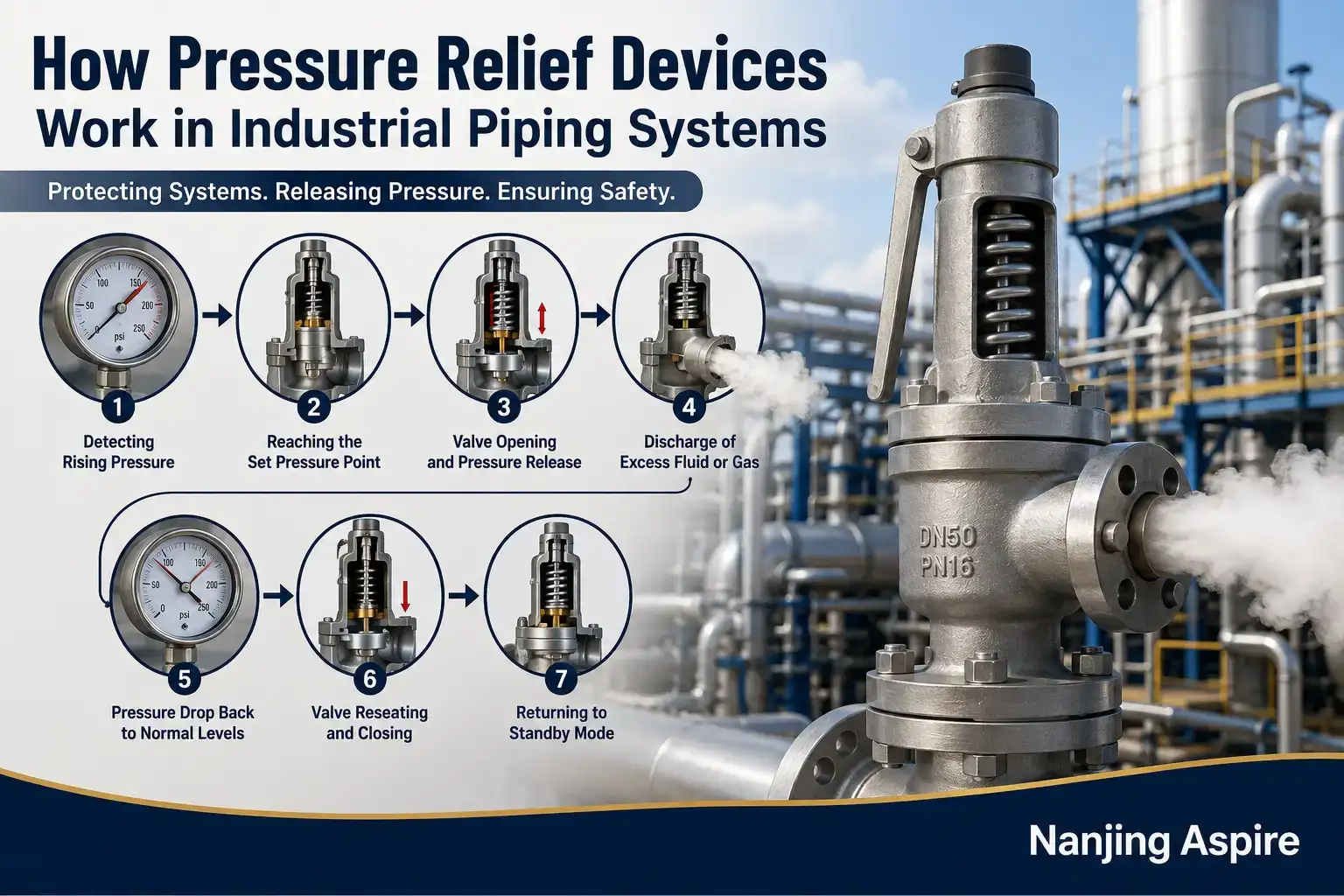
A pressure relief device stays connected to the pipeline or vessel it protects, sensing pressure through a spring-loaded disc positioned against the flow path. Under normal operating conditions, the spring holds this disc firmly shut, keeping the valve sealed against the system pressure. As fluid or gas pressure inside the pipeline increases, it pushes against the underside of the disc with growing force. The valve does not open at this stage, but the mechanism stays in constant contact with the pressure, ready to respond the instant conditions cross a critical threshold.
Every pressure relief device carries a calibrated set pressure, which is the exact point at which the valve must open to protect the system. Engineers determine this set pressure based on the maximum safe operating limit of the pipeline, vessel, or boiler the device protects. As system pressure climbs toward this limit, the force against the valve disc eventually overcomes the resistance of the internal spring. This moment marks the transition point where the device shifts from passive monitoring into active pressure release.
Once pressure exceeds the set point, the valve disc lifts away from its seat and opens a flow path for the trapped pressure to escape. A safety valve opens through a sudden pop action, lifting fully open within a fraction of a second to release gas or steam quickly. A relief valve opens more gradually, lifting in proportion to how far pressure has risen above the set point. This opening action removes the direct threat of overpressure and gives the system an immediate outlet for the buildup.
With the valve open, excess steam, gas, or liquid flows out through the discharge outlet, moving away from the protected system. This discharge continues as long as pressure remains above the set point, allowing the valve to keep releasing media until the danger passes. Piping systems often route this discharge to a safe collection point, a vent stack, or a containment vessel, depending on the fluid type and the facility's safety design. This step actively reduces the pressure that triggered the valve in the first place.
As fluid or gas continues to escape through the open valve, pressure inside the pipeline or vessel begins to fall. The rate of this pressure drop depends on the discharge capacity of the valve and the volume of media still building up in the system. Once pressure falls below the set point, the force pushing against the valve disc weakens, and the spring inside the device starts to regain control over the disc position. This drop signals that the danger has passed and the valve can begin closing.
As pressure eases below the set point, the spring pulls the valve disc back down onto its seat, sealing the flow path once again. A safety valve closes quickly, snapping shut in a manner similar to how it opened. A relief valve closes gradually, easing back into its seated position as pressure continues to drop. This reseating action stops the discharge and restores a tight seal, preventing any further loss of fluid or gas once the system reaches a safe pressure level.
With the valve fully reseated, the pressure relief device returns to its normal standby state, sealed and ready to monitor the system again. The spring holds the disc firmly against the seat, just as it did before the pressure event began. The device remains in this position indefinitely, requiring no manual reset, until pressure rises again and triggers the same detection and release cycle. This automatic reset function is what allows a single device to protect a piping system through repeated pressure events over its service life.
Understanding how these devices work makes it easier to select the correct one for your piping system. Steam and gas applications need a safety valve built for fast pop action release, while liquid pipelines need a relief valve built for gradual, controlled discharge. Nanjing Aspire Group can help you match the right device to your pressure requirements. Contact us today to discuss your system specifications and get a quote.